A home solar system has four main parts: the panels, the inverter, the HEDNO (ΔΕΔΔΗΕ) meter and, if you want one, a battery. Here is what each one does and where the energy goes during the day.
1. The panels: electricity from light
Solar panels convert sunlight into direct current (DC). The more light falls on them, the more energy they produce. That is why orientation (ideally south), tilt and shading from chimneys, trees or neighbouring buildings all matter.
The size of a system is given in kW (e.g. 5.4 kW or 10 kW) and is the sum of the power of all panels. In Heraklion, each 1 kW produces about 1,500–1,600 kWh a year on a south-facing roof. See how much 1 kW produces in Crete, month by month.
2. The inverter: the "brain" of the system
Your home runs on alternating current (AC), the same as the grid. The inverter converts the panels' direct current into alternating current, synchronises with the grid and decides at every moment where the energy goes. It also records production, which you can see in the app on your phone.
There are three types: grid-tied (on-grid), hybrid (for a battery) and off-grid. We explain them in the guide which inverter is right for you.
3. Where the energy goes during the day
- First to the house. Whatever is running at that moment (fridge, air conditioner, washing machine, pump) is powered by the sun first. This is the most valuable energy, because you do not buy it.
- Then to the battery, if there is one. The midday surplus is stored for the evening.
- Any surplus goes to the grid. Under Net Billing the energy you feed into the grid is compensated.
- At night or on cloudy days, the house takes energy from the battery and, once it is empty, from the grid, as before.
4. The HEDNO meter
When the solar system is connected, HEDNO (ΔΕΔΔΗΕ) installs a bidirectional meter. It measures separately the energy you take from the grid and the energy you give to it. We handle the application and the whole process until connection.
5. The battery (optional)
The battery keeps daytime energy for the evening, so a larger share of your bill is covered by the sun. With a hybrid inverter and the right wiring, it can also give you power during a power cut. For sizing, see the guide on lithium batteries.
A real example
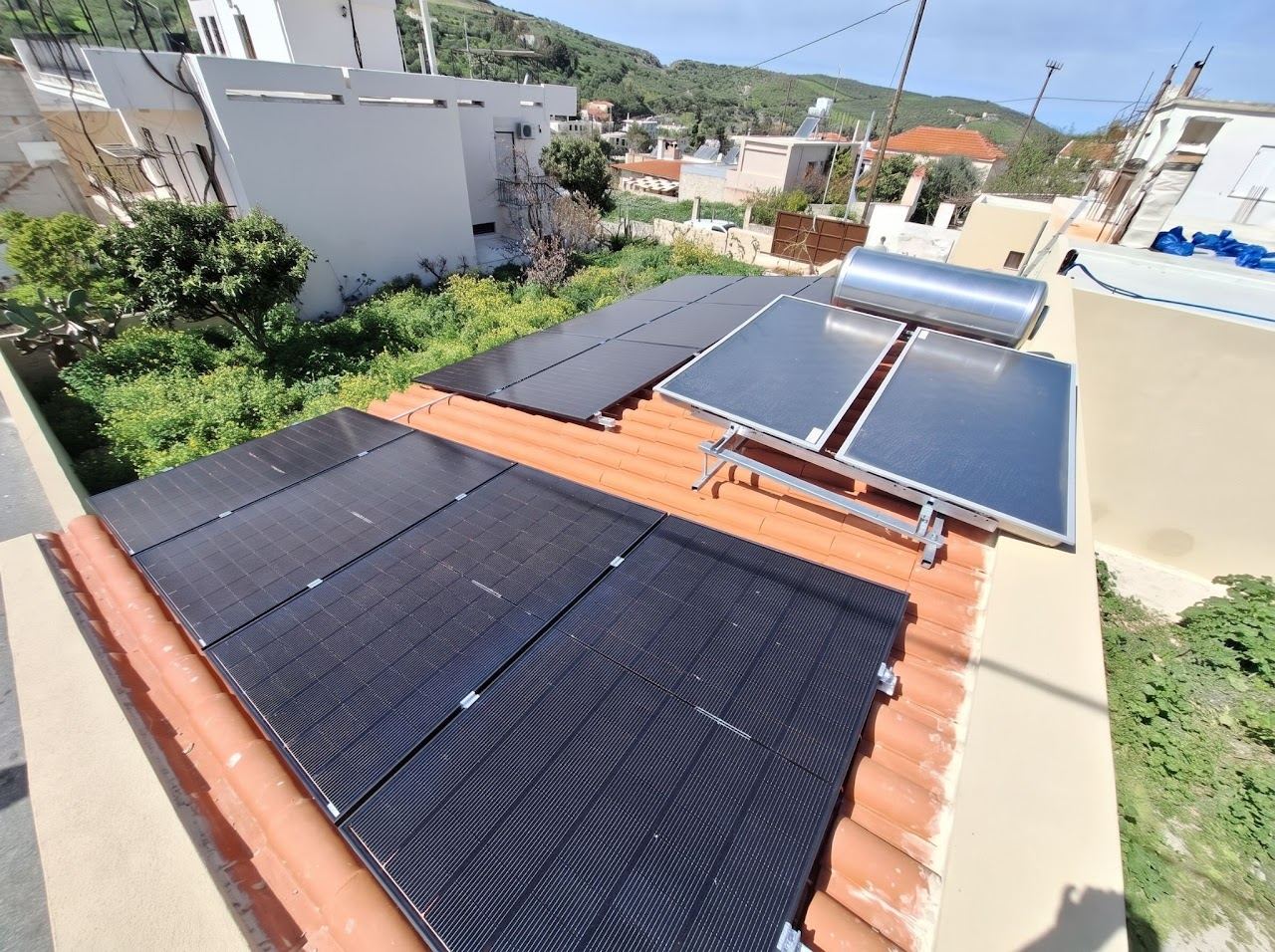
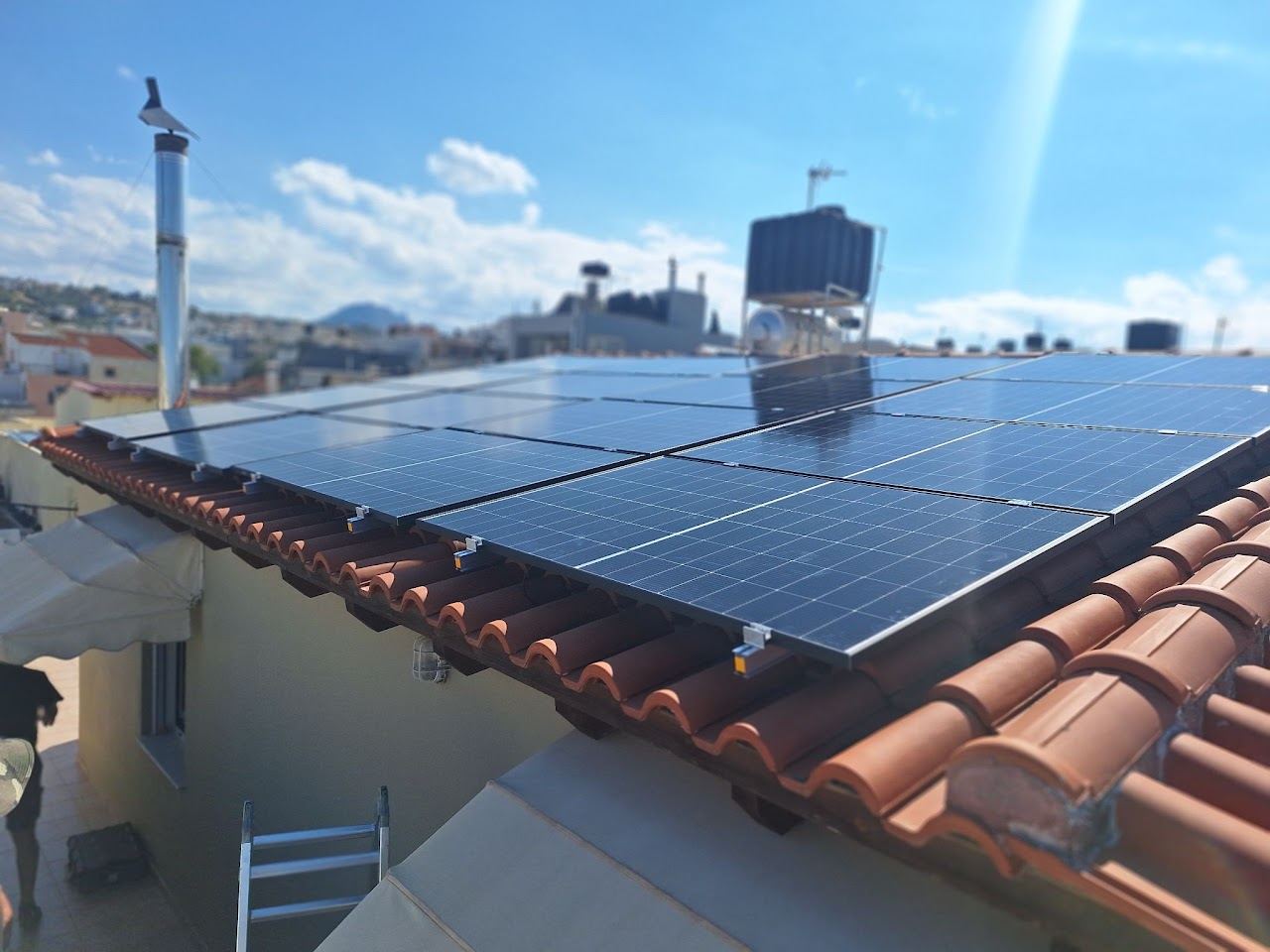
On a detached house in Heraklion we installed a 10 kW solar system with a 20 kWh battery. At midday the sun covers the house and charges the battery; in the evening the house runs on the battery and takes from the grid only what is missing.
Frequently asked questions
Does a solar system work on cloudy days?
Yes, but it produces less. Under heavy cloud production drops noticeably, while with a few clouds the reduction is smaller. At night it produces nothing.
Does it need a battery to work?
No. A Net Billing solar system works without a battery. A battery increases the share of energy you use yourself and can give you power during an outage.
Ask for a free study for your home or business
Send us a recent electricity bill and we will propose the right system for your consumption.