The battery is what makes a solar system "work" in the evening too. The right size is not the largest one, but the one that is filled by the sun and emptied every evening.
Why LFP lithium
The batteries we install are lithium iron phosphate (LFP or LiFePO4). It is the most widespread technology for home storage, because:
- it has high thermal stability, making it one of the safest lithium chemistries,
- it withstands thousands of charge–discharge cycles, according to the manufacturers' datasheets,
- it can use almost all of its capacity without wearing out quickly,
- it needs no maintenance, unlike old lead-acid batteries.
How the size is worked out
The key question is: how much energy do you use from late afternoon until morning? That is the energy a battery can cover.
- We find your evening and night-time consumption, from your bills or from the household's habits (air conditioning, cooking, water heater, pump).
- We check that the solar system produces enough surplus during the day to fill it.
- We leave a margin for days with higher consumption.
For example, a home that uses about 8 kWh after sunset usually suits a battery of around 10 kWh. If a battery is much larger than what is charged or discharged, part of it goes unused.
Examples from our projects
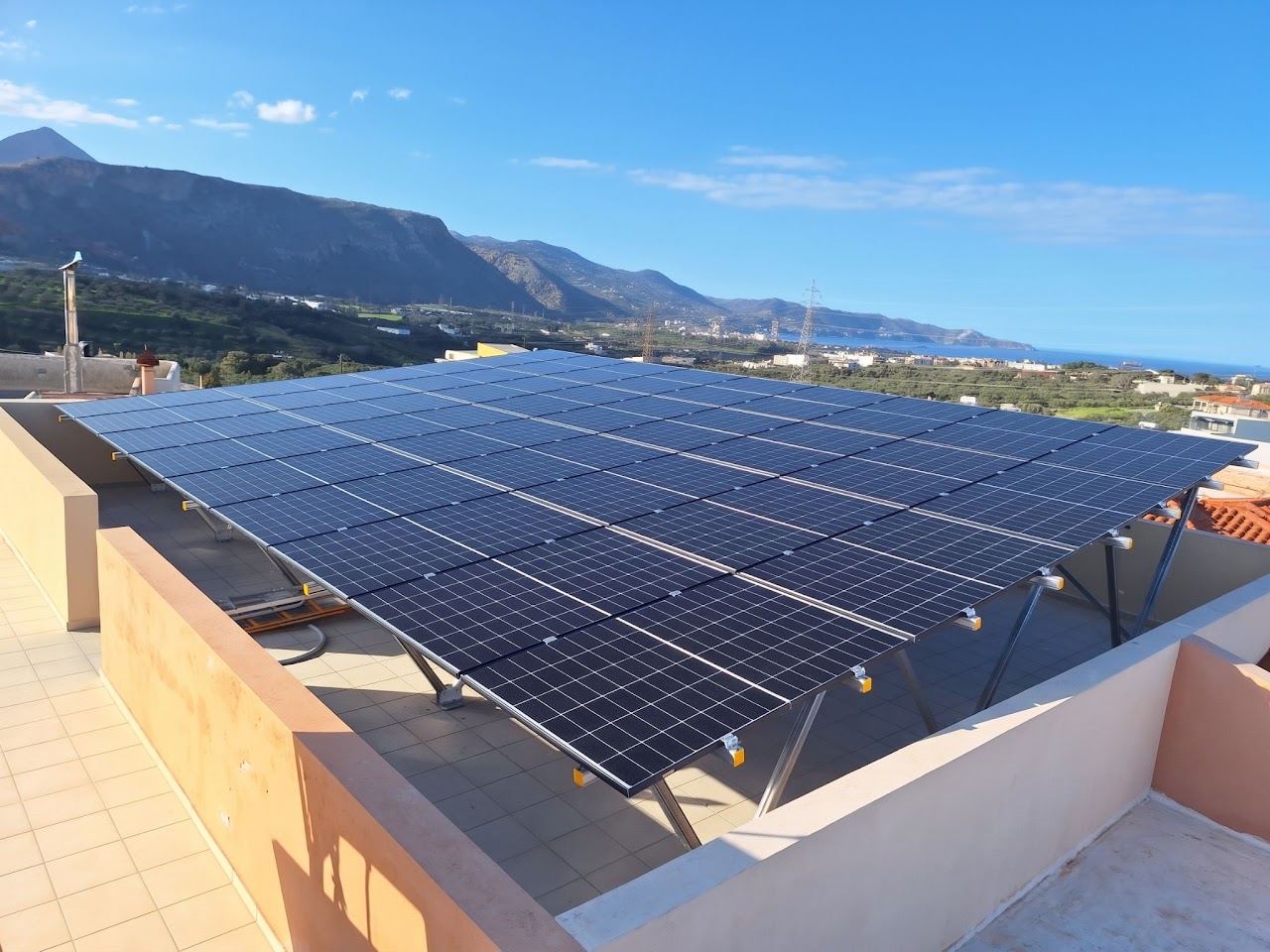
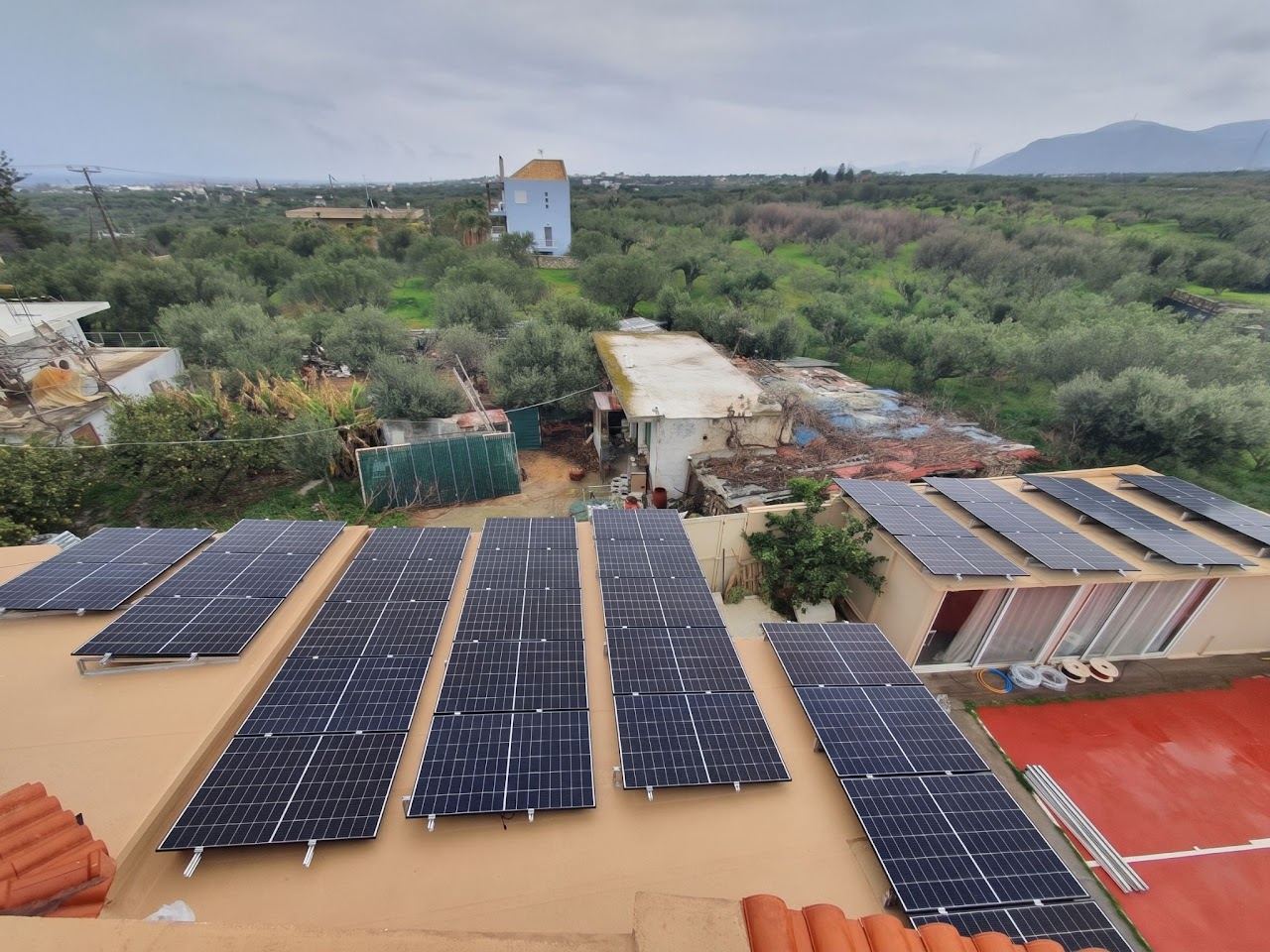
- Detached house in Heraklion: 5.4 kW with 10 kWh.
- Detached house in Heraklion: 10 kW with 20–30 kWh, depending on evening consumption.
- House in Agios Nikolaos: 9.8 kW with 20 kWh.
- Business in Malia: 55 kW with 120 kWh.
Where it is installed
The battery goes in a spot protected from sun and rain, with good ventilation, such as a storeroom, boiler room or shed. In a Cretan summer the location matters, because heat wears out any battery.
Brands
We install Pylontech, BYD, Huawei, Deye, Fronius and Victron batteries, as well as systems with CATL cells. The battery must be compatible with the inverter, which is why we choose them together.
Can I start small and expand later?
With most systems, yes: the batteries are modular and units can be added later, as long as the inverter supports it. We take this into account from the start in the study.
Frequently asked questions
How long does an LFP lithium battery last?
The manufacturers we work with usually give a 10-year warranty, with a cycle or energy limit stated in the datasheet. Actual lifespan depends on use and on the temperature of the room.
Is a battery worth it if we are out during the day?
Usually yes, because otherwise most of the midday production goes to the grid at a lower price. The battery keeps it for the evening, when you are at home.
Ask for a free study for your home or business
Send us a recent electricity bill and we will propose the right system for your consumption.